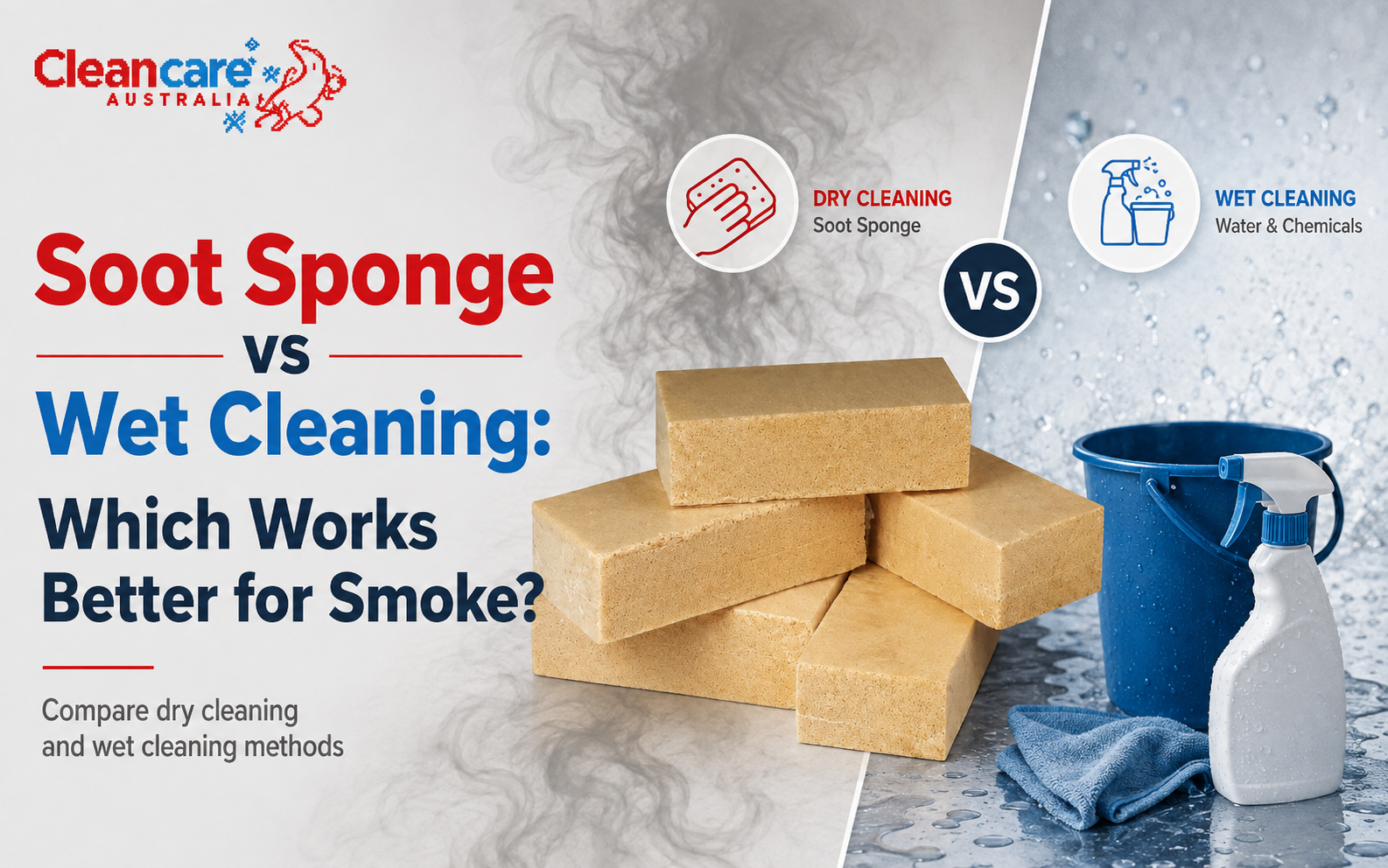
When smoke residue appears on a wall or ceiling, many people instinctively reach for water and detergent. However, wet cleaning is not always the best first step. Loose soot can spread when moisture is introduced too early, which is why a soot sponge may be useful during the initial stage of smoke cleanup.
Both dry and wet cleaning have a place in restoration work. The important point is understanding when each method should be used. Choosing the right method for the type of residue and surface can help reduce streaking, unnecessary damage and repeat cleaning.
What Is Dry Soot Cleaning?
Dry soot cleaning focuses on removing loose particulate residue without adding water.
A specialist dry-cleaning sponge collects contamination as it passes over a suitable surface.
This can be particularly useful on:
- Walls
- Ceilings
- Cornices
- Panelling
- Selected decorative surfaces
- Areas where liquid runoff is inconvenient
The purpose is to reduce loose residue before deciding whether another treatment is needed.
What Is Wet Cleaning?
Wet cleaning involves water, detergent or another suitable cleaning solution.
It can be effective for certain contaminants and washable surfaces, especially after loose soot has already been reduced.
Wet cleaning may be considered for:
- Washable painted walls
- Durable hard surfaces
- Greasy residue
- Remaining surface contamination
- General finishing after dry removal
However, the cleaner should always confirm that the surface can tolerate moisture.
Why Loose Soot Can Smear
Fine soot particles can sit loosely on a surface.
When a damp cloth is moved across them, some particles may be collected while others are dragged across the wall.
This can lead to:
- Grey streaking
- Larger contaminated areas
- Uneven appearance
- Additional cleaning work
- Difficulty assessing the original surface
For this reason, particulate removal is often separated from wet cleaning.
Advantages of Dry Cleaning
Dry cleaning provides several practical benefits during early smoke cleanup.
Key Benefits
- No immediate liquid application
- Greater control over loose residue
- Convenient use on walls
- Useful on ceilings
- Reduced risk of liquid dripping
- Better visibility of underlying staining
- Simple equipment requirements
Dry cleaning can also make it easier to determine how much damage remains once loose contamination is removed.
Limitations of Dry Cleaning
A dry-cleaning sponge is not intended to solve every form of smoke damage.
It may not completely remove:
- Permanent staining
- Oily residue
- Embedded odour
- Deep contamination
- Damage to paint
- Burn marks
Further treatment may still be required.
Advantages of Wet Cleaning
Wet cleaning can be effective after the particulate stage where the surface is suitable.
Potential benefits include:
- Removal of certain remaining residues
- More detailed cleaning of washable surfaces
- Ability to use specialised cleaning chemistry
- Better results on some greasy contaminants
However, correct product selection and dilution are important.
Limitations of Wet Cleaning
Wet methods can create problems when used at the wrong stage.
Potential disadvantages include:
- Smearing loose soot
- Affecting delicate paint
- Damaging wallpaper
- Creating liquid runoff
- Increasing drying requirements
- Producing streaks on vertical surfaces
Testing should always be carried out before treating large areas.
Comparing the Two Methods
Dry Cleaning Is Often Better When:
- Loose soot is clearly visible.
- The surface should not be wetted immediately.
- You are working overhead.
- You need to assess the extent of staining.
- The cleanup is in its early stages.
Wet Cleaning May Be Better When:
- Loose soot has already been reduced.
- The remaining residue responds to suitable cleaning solution.
- The surface is known to be washable.
- A finishing clean is required.
The two methods should be viewed as complementary rather than competing techniques.
Using Chemical Sponges as Part of a Staged Process
Chemical Sponges are particularly useful when a cleaner wants to begin with controlled dry particulate removal.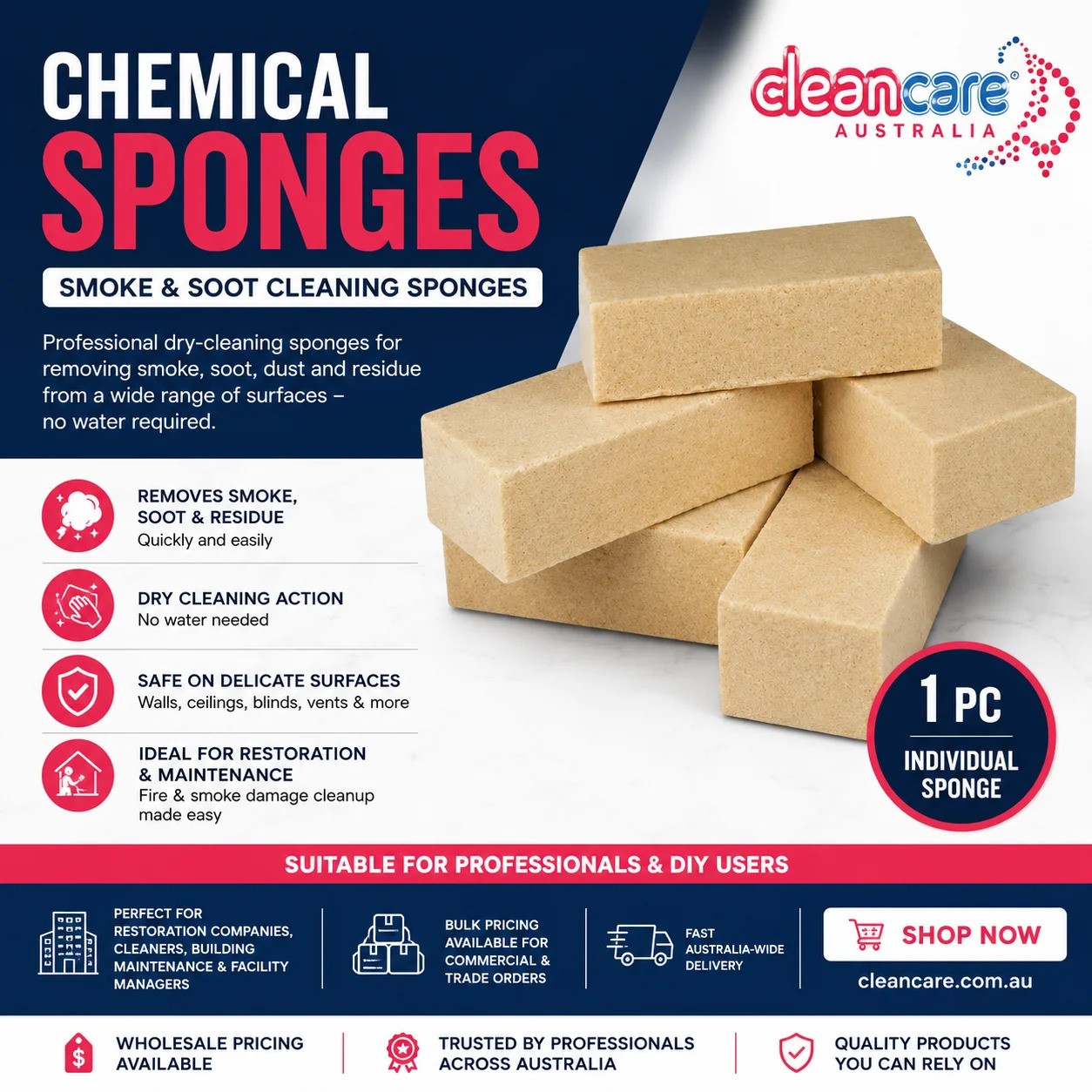
They allow the cleaning process to be separated into stages.
Stage 1: Inspect the Damage
Determine the source, severity and affected surfaces.
Stage 2: Protect the Area
Cover flooring and move furnishings where necessary.
Stage 3: Test
Check a small inconspicuous section.
Stage 4: Remove Loose Soot
Use the dry-cleaning method carefully.
Stage 5: Reassess
Look at what contamination remains.
Stage 6: Select Additional Treatment
Only introduce wet cleaning where appropriate.
Stage 7: Refinish if Needed
Some surfaces may require sealing or repainting.
This structured process can prevent unnecessary work.
Surface Type Makes a Difference
A cleaning method that works on one wall may not work on another.
Surface characteristics matter.
Matte Paint
May be more sensitive to rubbing and cleaning.
Gloss or Semi-Gloss Paint
Often more washable, but still requires testing.
Wallpaper
May be vulnerable to moisture and abrasion.
Older Surfaces
Previous paint systems or ageing materials can respond unpredictably.
Never assume that one technique is suitable throughout an entire building.
What About Ceiling Cleaning?
Ceilings provide a strong example of why dry cleaning can be useful.
Wet cleaning overhead may create dripping, streaking and additional mess.
A controlled dry process can reduce suitable loose soot first.
When working on ceilings:
- Use safe access equipment.
- Avoid overreaching.
- Protect your eyes.
- Work in small zones.
- Keep tools within safe reach.
The surface should still be tested before extensive cleaning.
When Professional Restoration Is Necessary
Major smoke damage should not be treated as a simple choice between dry and wet cleaning.
Professional restoration may be needed when:
- Several rooms are heavily contaminated
- Structural damage is present
- Smoke has entered air-conditioning systems
- Strong odours remain
- Burned building materials are present
- Electrical damage has occurred
- The combustion source is uncertain
A specialist can assess the whole property rather than only the visible marks.
Why Choose CleanCare Australia?
CleanCare Australia supplies professional cleaning products, equipment, chemicals, machinery and accessories for domestic and commercial applications. Its range supports cleaning contractors, restoration professionals, facilities teams and property owners who require purpose-made products for specialist cleaning tasks. For the initial dry stage of smoke cleanup, customers can source a smoke sponge designed to help remove smoke, soot, dust and residue from suitable surfaces. Choosing a specialist supplier also gives cleaners access to other products that may be required during later cleaning stages.
Conclusion
Neither dry cleaning nor wet cleaning is automatically better in every situation. The most effective method depends on the residue, surface and stage of the restoration process. Dry cleaning can be valuable for removing loose soot first, while wet cleaning may become appropriate for remaining contamination on washable surfaces. By using each method at the right time, cleaners can reduce smearing, protect surfaces and create a more controlled smoke-cleaning process.