Concealing rubbish inside a cabinet can make a kitchen look cleaner, reduce floor clutter and keep waste close to the work area. However, hidden systems are not all the same. Choosing among kitchen bins requires more than selecting a capacity; the cabinet position, opening style, plumbing and household routine all affect which option will work best.
The main choices include simple containers placed inside a cupboard, systems designed around sink plumbing, door-mounted products and sliding frames. Each has advantages and limitations. A useful comparison should focus on access, installation, capacity, cleaning and the amount of cabinet space available.
Begin with the Cabinet Location
The first decision is where the waste system should sit. A cabinet near the food-preparation bench is usually convenient because most scraps and packaging are created there. A position near the sink or dishwasher also supports plate clearing and clean-up.
Avoid selecting a location only because the cupboard is empty. An inconvenient cabinet may cause household members to leave rubbish on the benchtop or keep a second container elsewhere. The system should support the natural movement between preparation, cooking and washing.
Questions About Placement
Before comparing products, ask:
- Is the cabinet close to where waste is produced?
- Will an open door or extended frame block a walkway?
- Are there pipes, filters or electrical points inside?
- Can the buckets be lifted out without hitting the benchtop?
- Is the cabinet base strong and level?
- Will nearby drawers or appliances interfere with access?
- Does the location allow easy cleaning?
These questions often eliminate unsuitable options before price or appearance needs to be considered.
Option One: A Simple In-Cupboard Container
The most basic hidden solution is a removable bucket placed on the cabinet floor. It requires little installation and may be suitable for renters or households wanting a low-complexity option. The container can usually be lifted out easily and moved if the cabinet layout changes.
The limitation is access: users must bend and reach into the cupboard. A loose bucket can also slide, tip or waste surrounding space.
This option suits low-use kitchens, rentals where drilling is restricted, unusual cabinets and households wanting a temporary or mechanical-free solution. It is flexible, but it may not provide the stability of a fitted system.
Option Two: A Solution Designed for the Sink Cabinet
Under sink rubbish bins use an area that is often close to preparation and washing. They can be an efficient choice when no other base cabinet is available. Compact or offset containers may fit beside plumbing, leaving room for pipes and cleaning supplies.
The challenge is that sink cabinets vary significantly. Traps, hoses, water filters, disposal units and cabinet braces can reduce the usable space. A product that appears suitable from the outside may not fit once these obstructions are considered.
Advantages and Limitations
This option uses an awkward cabinet in a convenient location, but capacity may be reduced and measuring is more complicated. Record every pipe and fitting because a container may fit when stationary yet strike the plumbing as it moves.
Option Three: A Door-Mounted System
A door-mounted bin attaches to the inside of the cabinet door. When the door opens, the container moves with it, bringing waste closer to the user. Some designs also use a lid that opens automatically or remains fixed within the cabinet.
This style can work well in a narrow cupboard because it does not always require a wide runner frame. It provides quick access and may be suitable for light, frequent waste. Installation is usually more involved than placing a loose bucket in the cabinet.
A full container adds weight to the door, so check hinge condition, mounting instructions and load limits. The bin must clear shelves throughout the full swing.
Option Four: A Sliding Pullout System
A sliding frame brings one or more buckets forward on runners. Well-designed pull out bins provide direct access, support multiple compartments and keep the containers stable. Full extension can make rear buckets easier to remove and clean.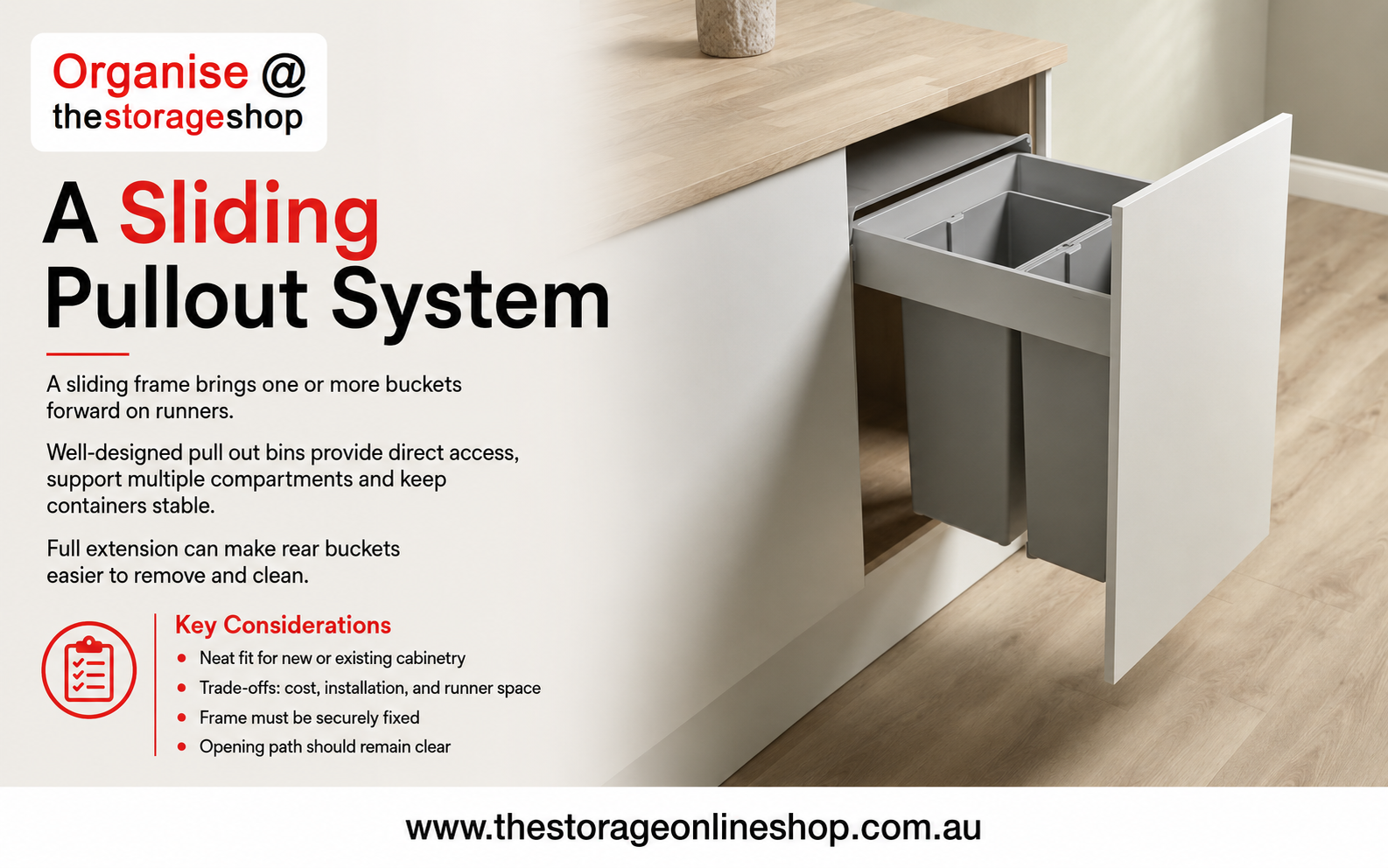
This option integrates neatly into new or existing cabinetry. Its trade-offs are cost, installation and the space occupied by runners and mounting components. The frame must be securely fixed and its opening path kept clear.
When a Sliding System Makes Sense
A pullout arrangement suits frequent use, separate rubbish and recycling, limited floor space and users who want to avoid reaching into a deep cupboard. It requires enough clear width and depth, and may be unsuitable when plumbing occupies most of the cabinet.
Compare Capacity and Separation
Capacity should reflect actual household volume. A large family may need a generous general-waste bucket, while a smaller household may prefer modest containers that are emptied frequently. Recycling can require more volume than expected because packaging is bulky.
A single container maximises one waste stream, while double systems separate rubbish and recycling. Extra compartments may hold food scraps, although each bucket becomes smaller. Check individual dimensions, liner compatibility and full weight rather than relying only on total litres.
Compare Cleaning and Odour Control
Every hidden system needs regular cleaning. Removable buckets with smooth surfaces are easier to wash. Frames should allow crumbs and spills to be reached rather than trapping them beneath complicated hardware.
A fixed lid can help contain smells and may prevent the top of the bag from being visible. However, food waste should still be emptied regularly. Overfilled bags can catch beneath lids or fall behind sliding frames.
Simple buckets are easy to wash but may expose the cabinet floor to spills. Fitted systems stay stable, although brackets and runners need wiping.
Compare Installation Requirements
Loose containers need almost no installation. Door-mounted products require accurate positioning on the cabinet door, while sliding systems may attach to the base, side panels or front. Read the product instructions before ordering to confirm the required clearances and fixing points.
Uneven floors, central hinges and decorative doors may complicate installation. Professional help may be worthwhile when joinery is valuable or the mechanism is complex.
Why Choose The Storage Online Shop?
The Storage Online Shop offers a dedicated range of cabinet, pullout, door-mounted, door-operated and freestanding waste products, as well as wider kitchen and household storage solutions. This variety allows shoppers to compare different configurations and capacities for existing cabinets or renovation plans. The business also publishes Australia-wide delivery information on its website.
Make the Decision Based on Daily Use
The right system is the one that fits the cabinet and feels natural during everyday cooking. A simple bucket offers flexibility, an under-sink option makes use of awkward space, a door-mounted product provides fast access, and a sliding frame delivers stable, organised movement.
When comparing under sink rubbish bins with other concealed systems, measure every obstruction, consider how often the bin is used and decide how many waste streams need separate compartments. The most expensive option is not automatically the best; correct fit and convenient access matter more.
A well-chosen hidden system should make disposal easier. Comparing placement, capacity, opening style and maintenance helps keep the kitchen organised for years.